Holland Lop Color Guide: An In-Depth Exploration
Delve into the captivating world of Holland Lop colors! This guide explores genetics, patterns, and ARBA standards, offering a comprehensive resource for enthusiasts and breeders alike.
Holland Lops boast a remarkable spectrum of colors, stemming from complex genetic interactions. Understanding these nuances is crucial for breeders aiming for specific hues and patterns, and for enthusiasts simply appreciating their beauty. The breed’s compact size and endearing floppy ears are wonderfully complemented by the diverse palette nature provides.
From solid shades like black and blue to striking broken patterns and the warm tones of red and opal, the possibilities seem endless. However, achieving desired colors isn’t simply about breeding two bunnies of a certain shade together. It requires a grasp of underlying genetics – the D-locus, agouti gene, and dilution factors all play vital roles.
This guide will unravel these complexities, providing a detailed exploration of Holland Lop coloration. We’ll examine how genes influence pigment production, resulting in the wide array of recognized colors by organizations like the ARBA (American Rabbit Breeders Association). Whether you’re a seasoned breeder or a new Holland Lop owner, this resource will deepen your appreciation for the artistry of rabbit genetics and the stunning variety within this beloved breed.
Understanding Rabbit Coat Color Genetics
Rabbit coat color is determined by genes, specifically alleles interacting at multiple loci. These loci control the production, distribution, and intensity of pigments – primarily eumelanin (black/brown) and phaeomelanin (red/yellow). The most fundamental aspect is understanding dominant and recessive alleles; a rabbit inherits one allele from each parent for each gene.
A key concept is the ‘genetic formula’ or genotype, representing the alleles a rabbit possesses. This dictates the expressed trait, or phenotype – the visible color. For example, a rabbit might carry a gene for a certain color but not express it if it’s recessive and paired with a dominant allele for a different color.
Several loci are crucial. The A-locus controls agouti distribution, the B-locus affects black versus brown pigment, and the D-locus governs pigment density (full color vs. dilution). Modifying genes further influence these base colors, creating variations like chinchilla, Himalayan, and tortoiseshell. Understanding these interactions is essential for predicting offspring colors and avoiding unwanted results in breeding programs. It’s a fascinating, complex system!
The D-Locus and Holland Lop Colors
The D-locus is pivotal in determining pigment density in Holland Lops, controlling whether colors are ‘full’ or ‘diluted’. It has two primary alleles: D (dominant, full color) and d (recessive, diluted color). A rabbit needs two ‘d’ alleles (dd genotype) to exhibit dilution. This impacts all colors, transforming black to blue, chocolate to lilac, and red to cream.
Dilution doesn’t alter the type of pigment, only its concentration. A genetically black Holland Lop with the ‘dd’ genotype won’t produce brown pigment; it will still produce eumelanin, but in a reduced amount, resulting in blue. This explains why blue Holland Lops aren’t a separate color genetically, but a variation of black.
Understanding the D-locus is crucial for breeders. Two full-color rabbits (DD or Dd) cannot produce a diluted offspring. However, two diluted rabbits (dd) will always produce diluted offspring. A carrier (Dd) can produce both full and diluted colors when bred to another carrier or a diluted rabbit. Predicting outcomes requires careful consideration of parental genotypes.
Solid Color Patterns in Holland Lops
Solid Holland Lops display a single, uniform color across their entire coat, from nose to tail. These are genetically straightforward, relying on a dominant ‘aa’ genotype at the Agouti locus, suppressing the typical banded pattern. Common solid colors include black, blue, chocolate, lilac, and red, each influenced by the D-locus for potential dilution.
Achieving a true solid color requires careful breeding. Any hint of ticking or shading disqualifies a rabbit in show standards. Breeders aim for even pigment distribution, avoiding ‘frosting’ (lighter tips) or uneven coloration. Solid reds, in particular, can be challenging, requiring attention to wide band genetics to ensure consistent color.
Havana solids present a unique case, with specific shades of chocolate recognized by ARBA. Himalayan solids, while possible, are less common and require careful genetic planning to maintain color point intensity. Solid color genetics are foundational, serving as a base for understanding more complex patterns like broken colors.
Broken Color Patterns in Holland Lops
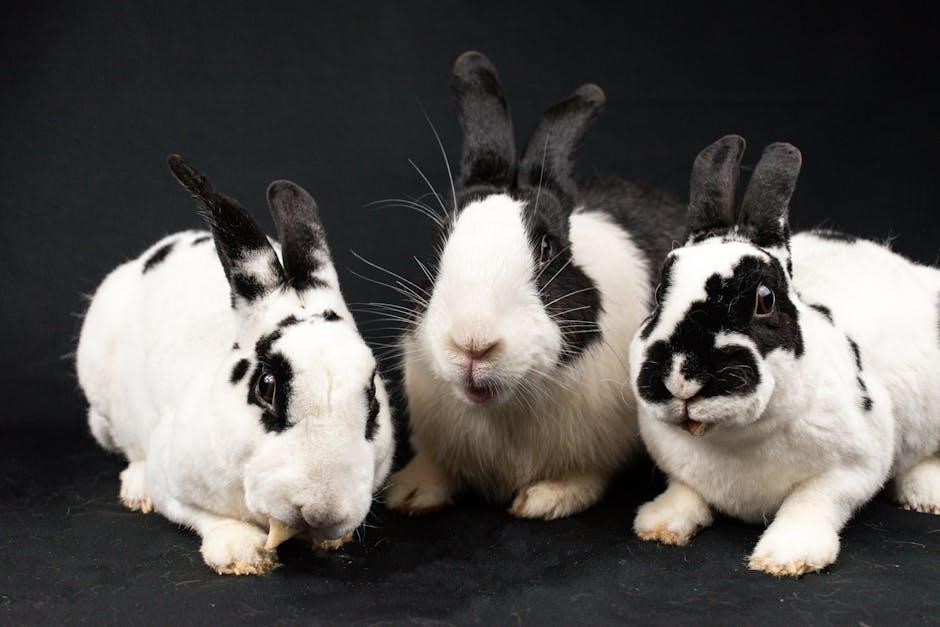
Broken Holland Lops exhibit a striking combination of colored and white fur, creating visually appealing patterns. This is governed by the ‘En’ gene (English spotting), which introduces white markings. The extent of white varies greatly, ranging from minimal spotting to nearly all-white rabbits with colored ears and a nose marking – known as a ‘Charlie’ pattern.
Broken patterns are judged based on symmetry and clarity of markings. Ideal broken Holland Lops display balanced color distribution, avoiding excessive white or uneven patches. The colored areas retain the same genetic characteristics as solid colors, meaning a broken black Lop carries the same black genetics, simply modified by the ‘En’ gene.
Understanding the ‘En’ gene’s expression is crucial. Multiple copies of the gene can lead to more extensive white, while its interaction with other genes influences the final pattern. Broken patterns appear across all base colors, resulting in diverse combinations like broken black, broken blue, and broken chocolate, adding to the breed’s visual variety.
Black and Otter Holland Lops
Black Holland Lops represent a foundational color, displaying a rich, deep, and lustrous coat. Genetically, they possess the ‘aaBB’ genotype at the A-locus and ‘ee’ at the E-locus, resulting in full expression of the black pigment. A truly black Lop should exhibit consistent color throughout the body, including the undercolor, with no fading or discoloration.
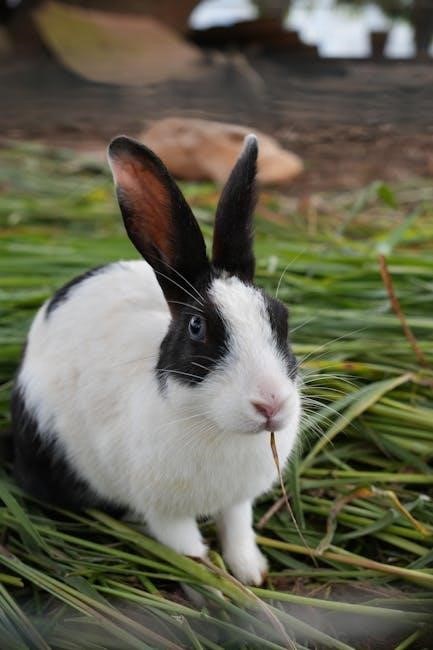
Otter Holland Lops, a captivating variation, feature a black base color with a distinctive cream or fawn undercolor. This is due to the ‘Ao’ allele at the A-locus, modifying the black pigment. The otter pattern presents a striking contrast, with the darker topcoat sharply defined against the lighter underbelly and inside the ears.
Distinguishing a true Otter from a poorly colored black requires careful examination. The undercolor should be consistent and clearly demarcated, avoiding muddy or mixed tones. Otter patterns are highly sought after, showcasing the genetic diversity within the Holland Lop breed and adding to their aesthetic appeal.
Blue Holland Lops: Variations and Genetics
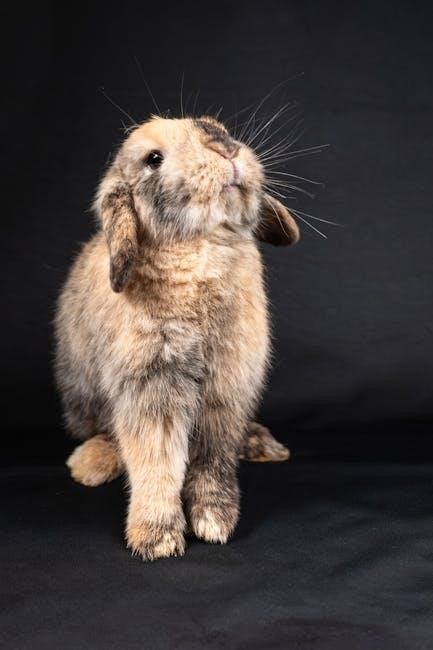
Blue Holland Lops exhibit a diluted form of black, resulting from the ‘dd’ genotype at the D-locus. This dilution gene affects the production of melanin, lessening the intensity of the black pigment to create a soft, slate-blue hue. The depth of the blue can vary, ranging from a light, silvery shade to a darker, more steel-like tone.
Variations within the blue color group include different shades and intensities, influenced by modifying genes. Some Blue Lops may display a “dusting” of silvering, adding a subtle sheen to the coat. Proper breeding practices are crucial to maintain consistent color and avoid undesirable shades.
Genetically, a Blue Lop must inherit two copies of the recessive ‘d’ allele. When bred to other colors, the blue gene can be carried without expression, potentially appearing in future generations. Understanding these genetic principles is vital for breeders aiming to produce high-quality, true-to-type Blue Holland Lops.
Chocolate and Lilac Holland Lops
Chocolate and Lilac Holland Lops represent further dilutions of the black pigment, stemming from the ‘bb’ genotype at a separate locus from the D-locus. Chocolate arises from a single recessive ‘b’ allele, creating a rich, milk chocolate brown. Lilac, however, requires two copies (‘bb dd’) – combining the chocolate gene with the dilution gene – resulting in a pale, pinkish-grey hue.
Distinguishing between Chocolate and Lilac can be subtle. Lilac often exhibits pinkish eyes and a cooler tone compared to the warmer Chocolate. The intensity of these colors can also vary, influenced by modifying genes and overall rabbit health. Careful observation and pedigree analysis are essential for accurate identification.
Breeders must understand these genetic interactions to consistently produce these colors. Combining Chocolate and Lilac Lops will always yield Chocolate offspring, while breeding to black can carry the recessive genes for future generations. Maintaining genetic purity requires diligent record-keeping and selective breeding practices.
Havana Holland Lops: Black, Blue, Chocolate & Broken
Havana Holland Lops showcase a unique, warm-toned color pattern governed by the ‘aa’ genotype at the Agouti locus. This gene restricts the color to the rabbit’s surface, creating a rich, even shade across the body. The Havana color itself isn’t a single color, but a modifier affecting black, blue, and chocolate.
Havana Black exhibits a deep, reddish-brown hue, while Havana Blue presents a softer, slate-grey tone with similar warm undertones. Havana Chocolate displays a milk chocolate shade, intensified by the Havana modifier. These colors are highly sought after for their distinctive appearance.
Broken Havanas, displaying white markings alongside the Havana shade, add further variety. The extent of white can range from minimal markings to a predominantly white rabbit with Havana points. Breeders aim for balanced markings and consistent color expression. Genetic testing and careful breeding are crucial for maintaining the quality and vibrancy of Havana Holland Lops.
Himalayan Holland Lops: Color Points Explained
Himalayan Holland Lops are renowned for their striking “pointed” coloration, a result of the ‘ch’ gene – a partial albinism gene. This gene restricts full color expression to the cooler areas of the body: the nose, ears, feet, and tail. The body remains a creamy white.
The base color influencing the points can vary, leading to Himalayan Black, Blue, Chocolate, and Lilac varieties. Himalayan Black boasts deep black points, while Himalayan Blue displays slate-grey points. Chocolate results in cocoa-colored points, and Lilac presents a delicate lavender hue.
Point development is temperature-sensitive; cooler temperatures encourage darker pigmentation. Therefore, environmental factors can subtly influence the intensity of the points. Breeders carefully monitor temperature and genetics to achieve consistent, well-defined points. A good Himalayan exhibits clear contrast between the points and the body color, showcasing a refined and elegant appearance.
Red Holland Lops and Wide Band Genetics
Red Holland Lops showcase a vibrant and unique color pattern, governed by the ‘Rw’ gene – responsible for the production of phaeomelanin, the red pigment. However, understanding “Wide Band” is crucial, as it significantly impacts the expression of red and other colors.
The Wide Band gene (ww) affects the distribution of pigment along the hair shaft, creating a band of color. While all Red Holland Lops carry the potential for Wide Band, it’s not always visibly expressed. Only the Red variety is genetically required to be ‘ww’ for show purposes.
Other colors, like Orange and Yellow, also fall within this genetic group. A rabbit with the ‘Ww’ genotype may display a more uniform color, while ‘ww’ results in the characteristic banding. Breeders carefully select for desired Wide Band expression, balancing color intensity and clarity. It’s important to note that the presence of Wide Band doesn’t automatically guarantee a specific appearance.

Opal and Cream Holland Lops: Dilution Factors
Opal and Cream Holland Lops demonstrate the fascinating effects of dilution genes on base coat colors. These colors aren’t genetically independent; they arise from the interaction of the ‘d’ (dilute) gene with other color loci, primarily Black or Chocolate. The ‘d’ gene reduces the intensity of pigment, resulting in lighter shades.
Opal results from the dilution of Chocolate, transforming a rich brown into a soft, silvery-grey. Cream, conversely, dilutes Black, creating a pale, off-white shade. Genetically, Opal is ‘dd bb’ (dilute Chocolate), while Cream is ‘dd BB’ (dilute Black). Understanding these genotypes is vital for predicting offspring colors.
Interestingly, the degree of dilution can vary, leading to subtle differences within Opal and Cream shades. Breeders often aim for consistent, even dilution for show quality. Bunny color genetics reveals that Opal and Cream can also interact with other modifying genes, further influencing their final appearance, making precise breeding a complex art.
Tortoiseshell and Harlequin Holland Lops
Tortoiseshell and Harlequin Holland Lops showcase striking, multi-colored patterns governed by complex genetic interactions; Both patterns are sex-linked, meaning they’re predominantly found in females (XX chromosomes), though rare male examples can occur with specific chromosomal abnormalities.
Tortoiseshell Holland Lops display a mottled mix of Black and Red (or their dilute counterparts, Blue and Cream). This patchwork arises from X-chromosome inactivation, where one X chromosome is randomly silenced in each cell. Harlequin, however, features broader, irregular patches of any two recognized colors – often Black and Orange, or Chocolate and Lilac.
The key difference lies in the distribution of color. Tortoiseshell is finer and more blended, while Harlequin presents larger, distinct blocks. Genetically, Harlequin requires the ‘Du’ gene (Dutch pattern) alongside the necessary color genes. Breeding for these patterns demands careful consideration of parental genotypes to achieve desired results and consistent markings.

The Role of Agouti Gene in Holland Lop Colors
The Agouti gene (A-locus) profoundly influences Holland Lop coat patterns, dictating the distribution of pigment along the hair shaft. It’s responsible for the ‘wild-type’ banded hair coloration seen in Agouti varieties, where each hair displays alternating bands of light and dark pigment.
Several alleles exist at the A-locus. ‘A’ represents the dominant Agouti pattern, while ‘at’ produces Tan patterns (dark top, light underbelly). ‘a’ is recessive and results in self-colors – solid, uniform coloration across the entire coat. The presence or absence of the Agouti gene dramatically alters how other color genes express themselves.
For example, a Black rabbit with the ‘A’ allele will be Agouti, displaying a banded appearance. The same rabbit with the ‘aa’ genotype will be a solid Black. Understanding the Agouti gene is crucial for predicting offspring colors and achieving specific patterns. It interacts with other loci, like the D-locus, to create a vast spectrum of Holland Lop color variations.
False Dwarf Holland Lops and Color Consistency
Holland Lops, being a dwarf breed, sometimes exhibit the ‘false dwarf’ phenotype. These rabbits carry only one copy of the dwarf gene (Dd) instead of two (dd), resulting in a larger size closer to a mini lop, but still possessing Holland Lop characteristics. This genetic variation doesn’t directly cause color inconsistencies, but it can complicate breeding for specific colors.
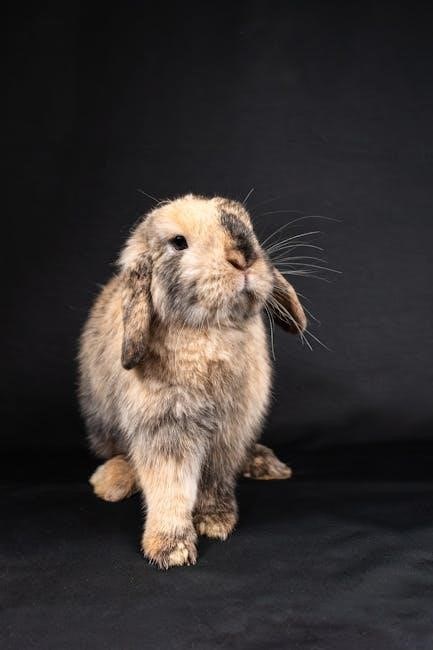
Breeders aiming for consistent color expression must carefully track lineage and genotypes. False dwarfs, while perfectly healthy and charming, introduce a wider range of potential genetic combinations. This increases the likelihood of unexpected color outcomes in litters, particularly when breeding for recessive traits.
Maintaining accurate records of dwarf gene status (Dd vs. dd) alongside color genetics is vital. Dilution factors or modifier genes can also interact, further influencing color expression. Responsible breeding practices, focused on genetic understanding, are key to preserving color purity within the Holland Lop breed, regardless of dwarf status.
ARBA Breed Standards and Color Recognition
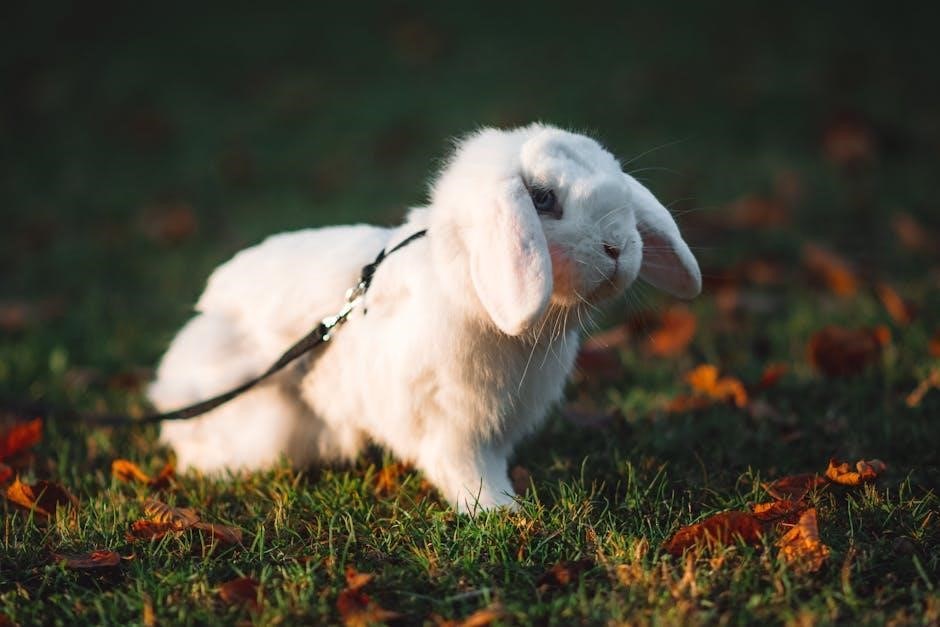
The American Rabbit Breeders Association (ARBA) sets the official standards for Holland Lop colors and breed characteristics. These standards dictate which colors are recognized for show purposes and define acceptable variations within each color group. Understanding these guidelines is crucial for breeders and exhibitors.
Currently, ARBA recognizes a broad spectrum of Holland Lop colors, categorized into solid patterns, broken patterns, and specific shades like black, blue, chocolate, lilac, and Himalayan. Each color has detailed descriptions regarding shade, depth, and uniformity. The ‘ARBA Official Breed ID Guide’ serves as the definitive resource.
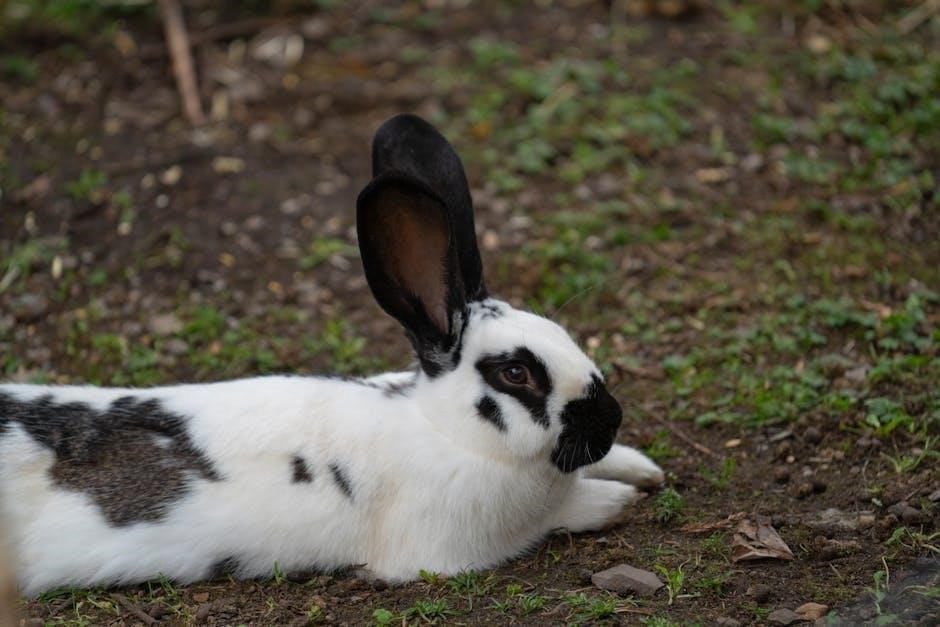
Broken patterns require specific markings – a colored butterfly nose, eye circles, and colored ears – with a defined percentage of white; Colors not explicitly listed by ARBA are not eligible for judging in sanctioned shows. Breeders striving for show quality must adhere strictly to these standards to ensure their rabbits meet ARBA’s criteria for color and overall conformation.
Resources for Holland Lop Color Identification
Accurate color identification in Holland Lops can be complex, requiring a blend of genetic understanding and visual assessment. Fortunately, several resources are available to assist breeders, owners, and enthusiasts in navigating this intricate process.
Hickory Ridge Hollands is a valuable online resource, offering a deep dive into color and gene labeling specifically for Holland Lop bunnies, detailing various patterns and fur types. The ARBA website itself provides the official breed standards, crucial for confirming recognized colors. Online rabbit forums and dedicated Holland Lop breeder groups often host discussions and shared knowledge.
Furthermore, color charts and genetic testing services can aid in determining a rabbit’s genotype, revealing hidden color potential. Websites dedicated to rabbit coat color genetics offer detailed explanations of the underlying principles. Remember, consulting experienced breeders and judges can provide invaluable practical insights, supplementing theoretical knowledge with real-world observation.